

Manufacturing Process
The manufacturing process of enamel pins starts with a design, which is then made into a mold. The mold is used to create the metal base, which can be made from either iron or zinc alloy. The base is then plated with a finish, such as gold or silver, to add an extra layer of durability and aesthetic appeal.
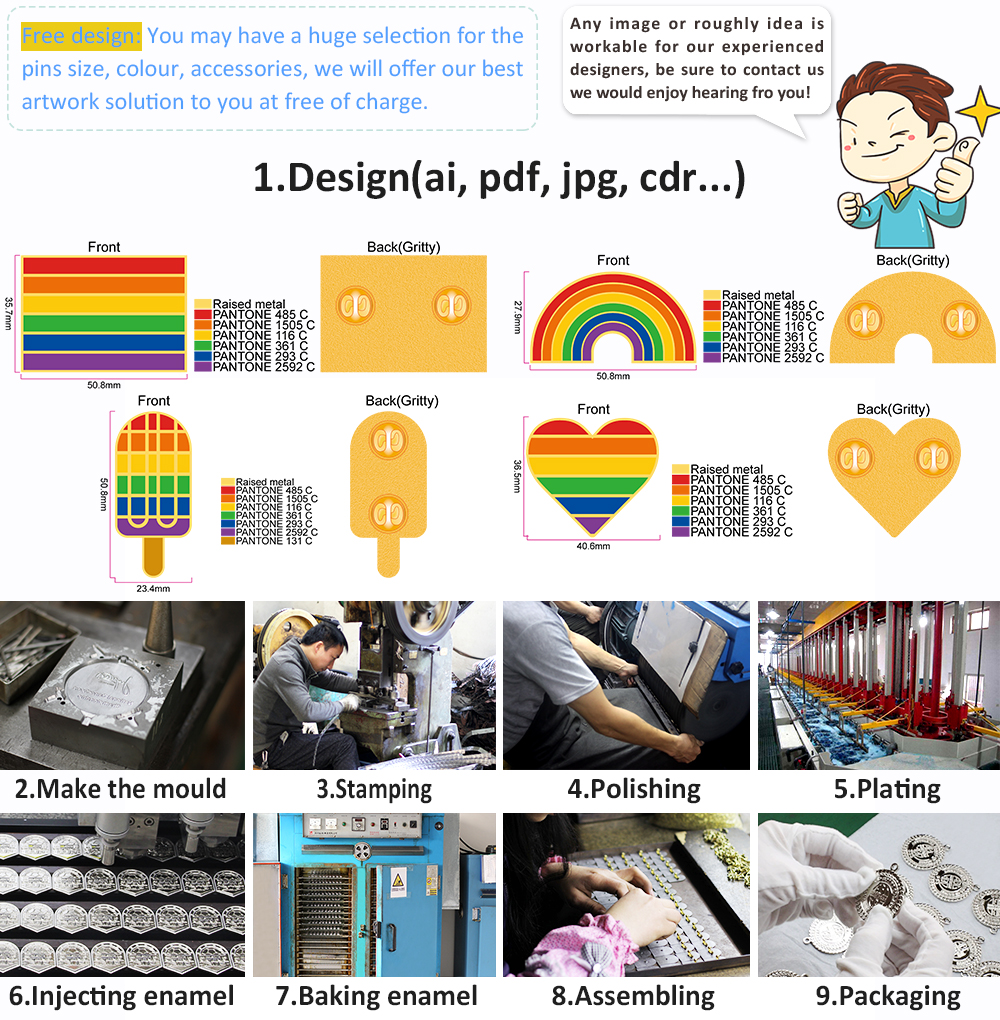
After the enamel has been set, the pin is polished to give it a smooth finish. A back pin or a butterfly clutch is then added to the back of the pin to make it easy to attach to clothing or other items.
Enamel Types
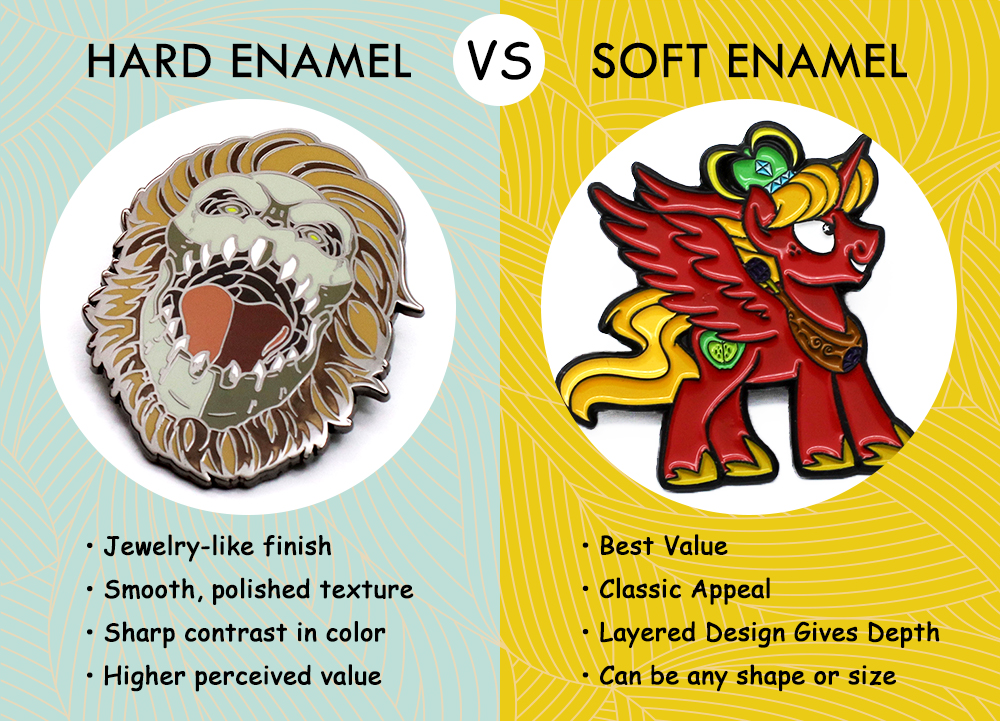
As mentioned earlier, enamel can come in different types, each with its unique finish and texture. Soft enamel is made by filling the recessed areas of the pin with enamel, which is then baked at a low temperature. This type of enamel results in a textured finish that gives the pin a three-dimensional look.
Iron vs Zinc Alloy
Enamel pins can be made from either iron or zinc alloy, and each material has its advantages and disadvantages. Iron is a cheaper option and is suitable for large quantities of pins. However, iron can be prone to rusting and is not as durable as zinc alloy. Zinc alloy, on the other hand, is more expensive but is highly durable and resistant to rust.
Conclusion
Enamel pins are a unique and stylish way to express oneself and are a popular accessory among people of all ages. With their manufacturing process, different enamel types, and materials, enamel pins are a versatile accessory that can be customized to suit any individual's preferences. By understanding the nuances of enamel pins, one can appreciate the craftsmanship that goes into making these tiny but impactful accessories.
Our factory develops and manufactures a variety of gifts, including custom medals, enamel pin badges and custom lanyards etc.